Growth Mindset: The Science of Curiosity
I read the article The Science of Curiosity by Knowledge@Wharton. The article is a dialogue between Knowledge@Wharton and an astrophysicist, Mario Livio, about curiosity and some of the science behind it. I learned quite a bit from the article and I thought it was interesting because it explained different types of curiosity in a way that was easy to understand but seemed not to oversimplify it too much. I figured that curiosity was arguably prevalent more now than ever because of the ease of access to information, contrary to what some say about people becoming complacent. This is one of the first points mentioned in the dialogue, about how access to such a plethora of information actually allows us to satisfy what is called "specific curiosity" incredibly quickly, and because we receive a reward for doing so we are then conditioned to be more curious. One thing I didn't know before going into the article is the fact there are different types of curiosity, such as "specific curiosity," "perceptual curiosity," and "epistemic curiosity." The introduction to the article states Mario Livio is the author of a book on curiosity so I am curious to read his book. If it is like the article, I am sure there is a good amount of interesting information that can be gleaned from it.
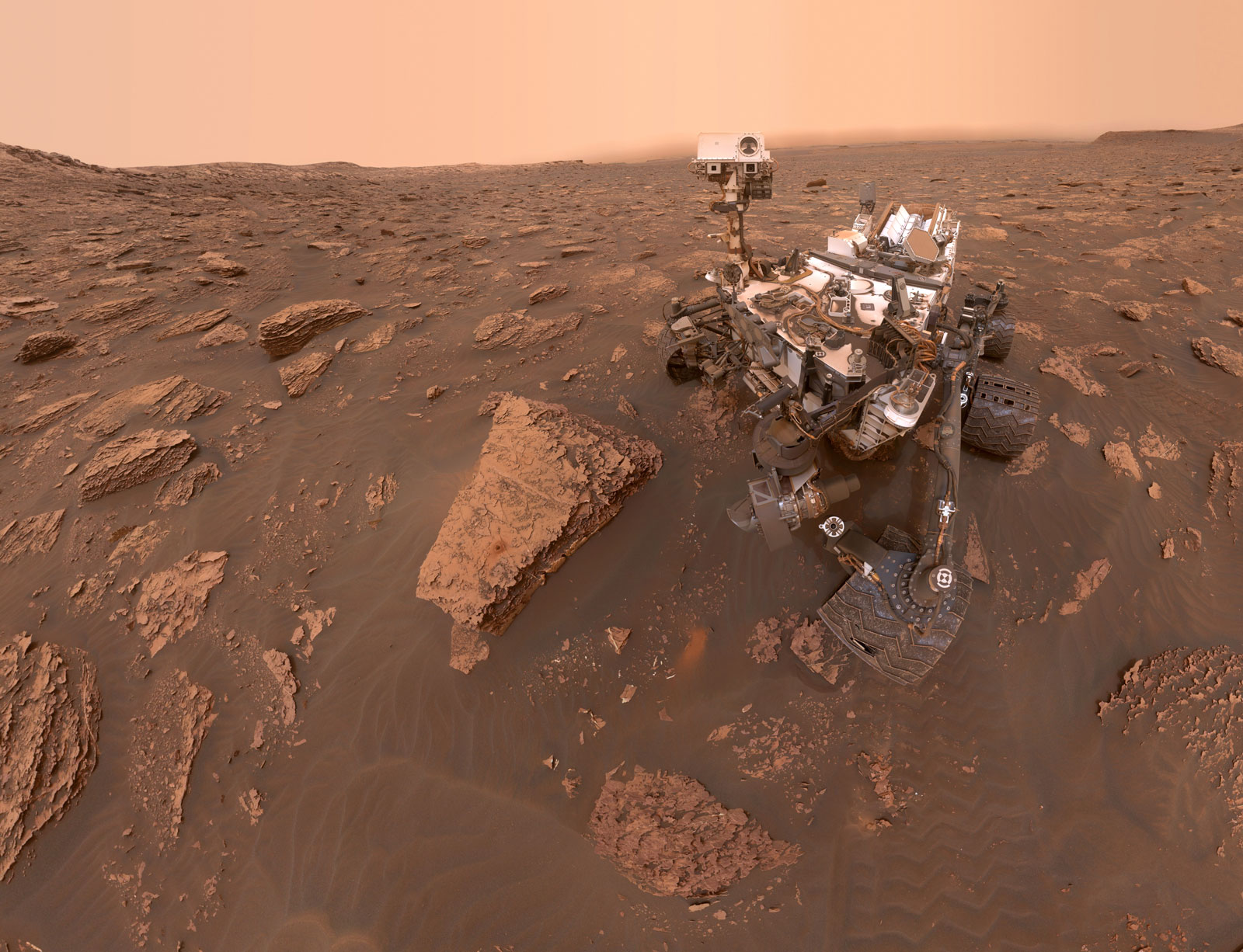 |
| Curiosity's Selfie on Mars, fitting for an article on curiosity. Source: NASA |


Comments
Post a Comment